How to connect Cursor MCP with VS Code

How to connect Cursor MCP with VS Code VS Code is the most popular code editor out there. With its recent AI makeover, it can do more than just help you write code. You can connect your applications to it and let LLMs automate many of the mundane tasks in your workflow. In this guide, I will explain how to connect Cursor with VS Code in the most secure and robust way possible via Composio.

Cursor logoCursor
Api Key

Cursor is an AI-powered code editor built on VSCode. It delivers smart, collaborative coding with integrated analytics and agent support.

5 Tools

How to connect Cursor MCP with VS Code

VS Code is the most popular code editor out there. With its recent AI makeover, it can do more than just help you write code. You can connect your applications to it and let LLMs automate many of the mundane tasks in your workflow.

In this guide, I will explain how to connect Cursor with VS Code in the most secure and robust way possible via Composio.

Also integrate Cursor with

Why use Composio?

Composio provides:

  • Access to 1,000+ managed apps from a single MCP endpoint. This makes it convenient for agents to run cross-app workflows.
  • Programmatic tool calling. Allows LLMs to write its code in a remote workbench to handle complex tool chaining. Reduces to-and-fro with LLMs for frequent tool calling.
  • Large tool response handling outside the LLM context. This minimizes context bloat from large tool responses.
  • Dynamic just-in-time access to thousands of tools across hundreds of apps. Composio loads the tools your agent needs, so LLMs are not overwhelmed by tools they do not need.

Integrate Cursor MCP with VS Code

1. Install with one click

Click the button below to add Composio to VS Code. You will be prompted to authorize. This requires VS Code 1.99+ with GitHub Copilot.

+Install in VS Code

2. Or add manually

Open or create .vscode/mcp.json in your project root and add the following configuration:

bash
{
  "servers": {
    "composio": {
      "type": "http",
      "url": "https://connect.composio.dev/mcp"
    }
  }
}

3. Authorize

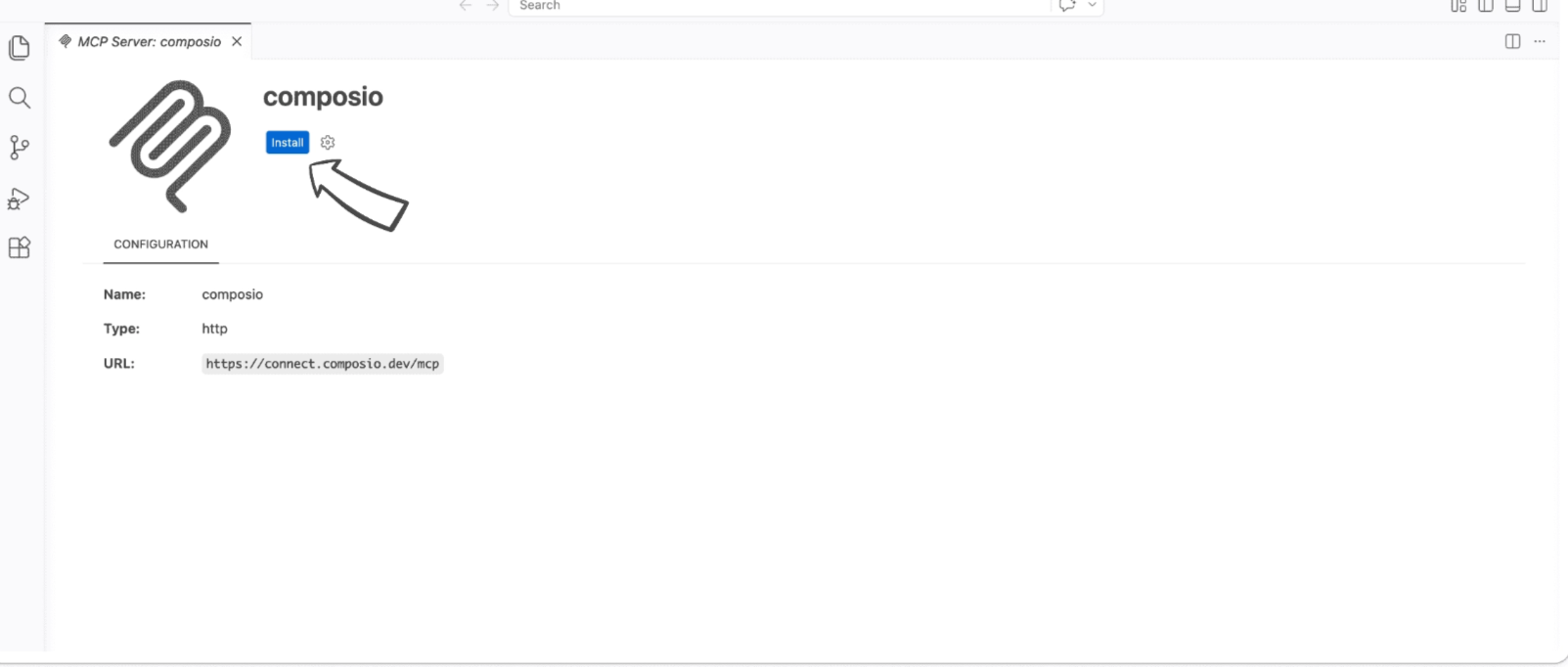
Click the install button to authorize VS Code to connect to Composio. VS Code will detect OAuth and prompt you to sign in.

VS Code MCP server install screen for Composio

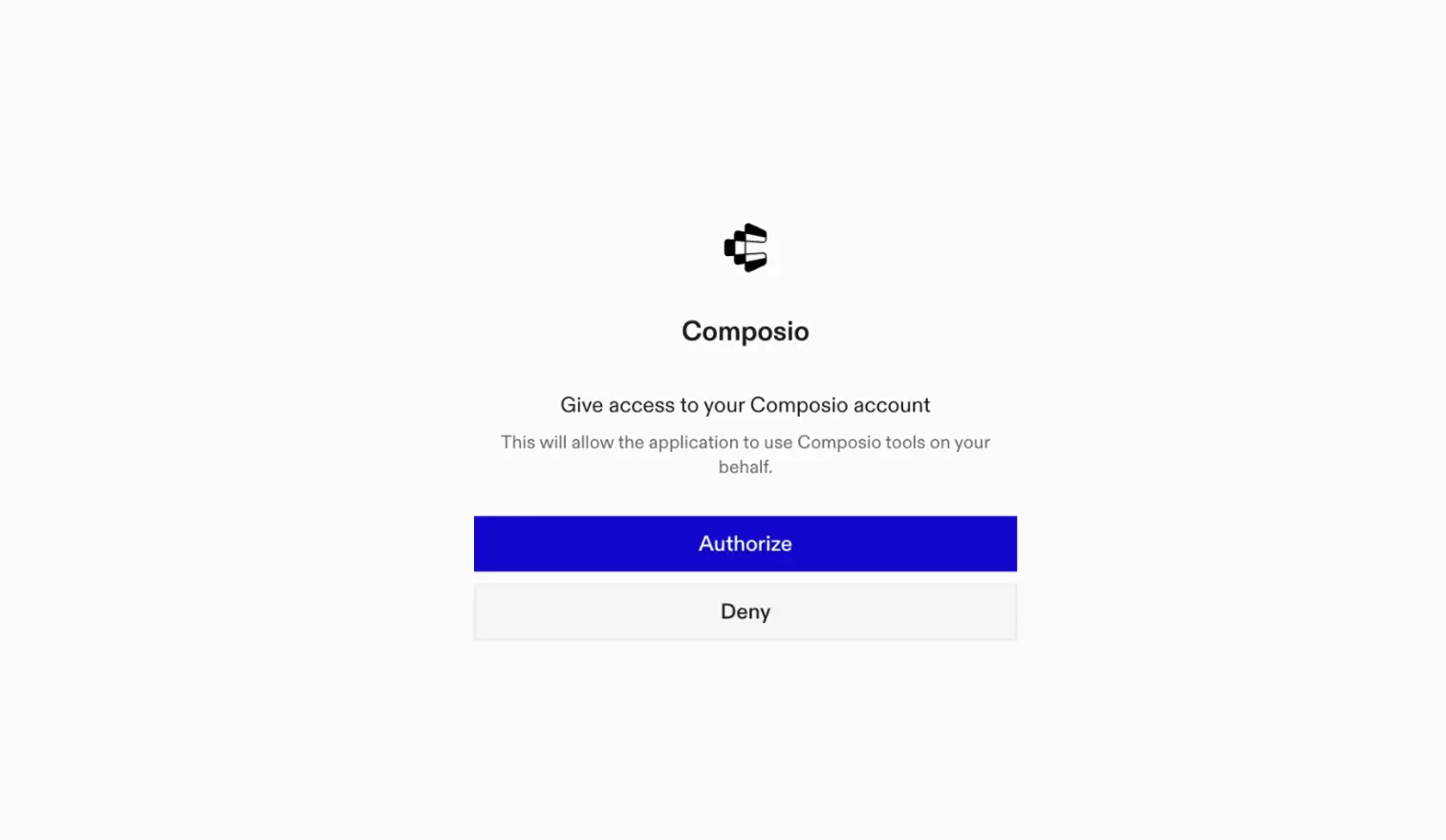
A browser window will open to authorize.

Composio authorization browser window

4. Authenticate Cursor and start working

Back in VS Code chat, ask the agent to connect to Cursor or give it any Cursor-related task.

For example, ask it to:

  • "List all active cloud agents for this project"
  • "Show recent code changes tracked by Cursor"
  • "Summarize analytics for your team's workspace"

It will prompt you to authenticate and authorize access to Cursor.

That is it. Composio tools are now available in VS Code, and your Cursor account is ready to use.

Way Forward

Now that Cursor is connected, extend your setup by connecting the other apps you already use every day, so your agent can run true cross-app workflows end to end.

  • Connect Calendar to turn threads into scheduled meetings automatically.
  • Connect Slack or Teams to post summaries, approvals, and alerts where your team works.
  • Connect Notion, Linear, Jira, or Asana to convert requests into tickets, tasks, and docs.
  • Connect Drive, Dropbox, or OneDrive to fetch, file, and share attachments without manual steps.
  • Connect HubSpot or Salesforce to log customer context, update records, and draft follow-ups.

Start with one workflow you do repeatedly, then keep adding apps as you find new handoffs. With everything behind a single MCP endpoint, your agent can coordinate multiple tools safely and reliably in one conversation.

TOOLS

Supported Tools

Every Cursor action and event your agent gets out of the box.

Get Agent Conversation

Tool to retrieve the conversation history for a specific cloud agent.

Get API Key Info

Tool to retrieve API key information including the key name, creation date, and owner email.

List Agents

Tool to retrieve a paginated list of all Cursor Cloud agents.

List Available Models

Tool to retrieve the list of available AI models in Cursor.

List GitHub Repositories

Tool to list GitHub repositories accessible to the authenticated user.

FAQ

Frequently asked questions

With a standalone Cursor MCP server, the agents and LLMs can only access a fixed set of Cursor tools tied to that server. However, with the Composio Tool Router, agents can dynamically load tools from Cursor and many other apps based on the task at hand, all through a single MCP endpoint.

Yes, you can. VS Code fully supports MCP integration. You get structured tool calling, message history handling, and model orchestration while Tool Router takes care of discovering and serving the right Cursor tools.

Yes, absolutely. You can configure which Cursor scopes and actions are allowed when connecting your account to Composio. You can also bring your own OAuth credentials or API configuration so you keep full control over what the agent can do.

All sensitive data such as tokens, keys, and configuration is fully encrypted at rest and in transit. Composio is SOC 2 Type 2 compliant and follows strict security practices so your Cursor data and credentials are handled as safely as possible.

Start with Cursor.It takes 30 seconds.

Managed auth, hosted MCP servers, and every Cursor tool your agent needs.Free to start.

Start building